Blog · Updated · Pete Lynagh
Logistics Company Branding: How to Build a Brand Buyers and AI Engines Trust
Most transport and logistics brands look the same. A blue logo, a truck on a highway, the words “reliable” and “on time” somewhere near the top of the website. Dentsu’s B2B Superpowers Index found 71% of B2B buyers say brands sound and act the same, and freight is the category that proves it.
That sameness is expensive. When a shipper cannot tell three carriers apart, the decision comes down to rate, and the rate conversation is the one you least want to be in. A brand is the thing that moves the conversation somewhere else.
This guide covers what logistics company branding actually includes, who the brand has to work for, how to position a carrier or forwarder in a market where everyone sells the same service, and how to run the brand once it exists so it keeps earning trust with buyers, with drivers, and increasingly with the AI engines that summarise you to buyers before they ever reach your site.
What a logistics brand actually is
The brand is not the logo. The logo is the smallest part of it.
A logistics brand is the set of expectations a buyer holds about your business before they pick up the phone: how you will communicate when a container is held at the wharf, whether your drivers turn up in uniform, whether your invoice will match the quote. The identity, the logo, the livery and the website, is how those expectations get signalled at a glance. The reputation is whether the operation lives up to them.
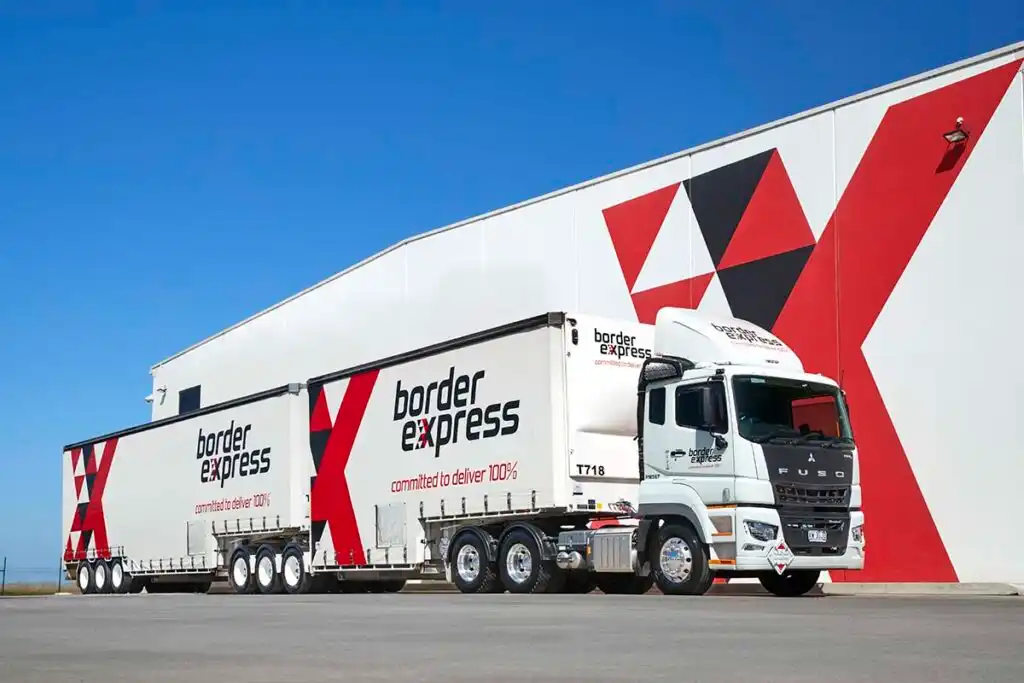
In this industry the brand also lives somewhere most companies never get to use: the side of a truck. A B-double in your livery passes thousands of people a day, including the warehouse managers and procurement staff who will one day search for a carrier. That is an advertising channel most businesses pay for. Yours comes with the fleet, if the livery is designed to be read at 100 kilometres an hour rather than on a business card.
Start with who the brand is for
Branding exercises that begin with colours end up with a prettier version of the same company. Begin with the target market instead.
For most carriers and forwarders the primary audience is not “businesses that ship things”. It is a specific kind of shipper: importers moving 40 to 400 containers a year through one port, a cold chain producer with a seasonal peak, a manufacturer who needs line haul between two states on a schedule. Each of those buyers has a different worry, and the brand has to speak to that worry, not to freight in general.
Two things make the logistics target market harder than most:
- The buyer is a committee. A logistics manager shortlists, a CFO checks the rate, an operations lead asks about the depot, and the owner signs. The brand has to survive all four, which is why consistency matters more here than in consumer categories.
- Drivers and depot staff are the second audience. Every transport business is also hiring, constantly. A brand that makes a 25-year-old consider driving for you is doing commercial work. The carriers we work with run the same brand and the same depot content for freight enquiries and for driver recruitment, and the recruitment side is often what the owner notices first.
Write the target market down in one sentence before any design work starts. “Victorian importers who need port cartage, unpack and metro delivery from one provider” is a brand brief. “Logistics companies” is not.
Positioning in a market where everyone sells the same thing
Every carrier is reliable and on time, or says so. Positioning is the decision about what else you are, stated clearly enough that a buyer can repeat it.
There are three positions that work in transport and logistics, and most strong brands pick one:
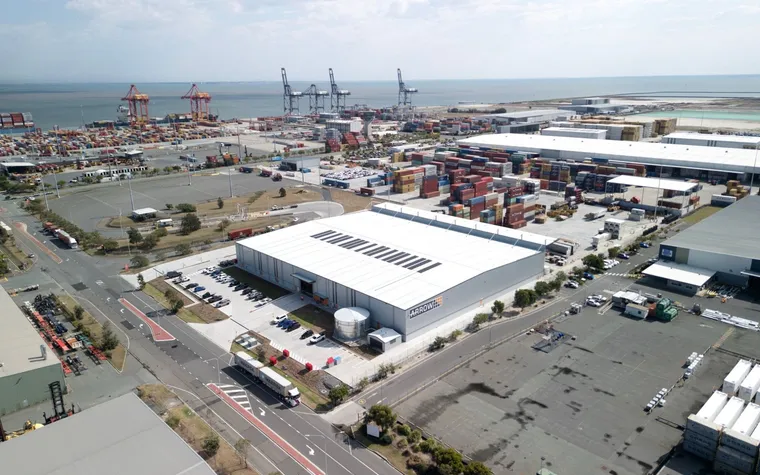
- The specialist. One freight type, one trade lane, one industry. Arrow Transport is a port logistics business, not a general carrier, and the brand says so in the first line. Specialists lose some enquiries and win the ones that matter, at better margins.
- The one-stop operator. Cartage, warehousing, unpack, distribution and customs under one roof, sold on the fact that the customer deals with one business instead of four. This only works if the website and the sales deck can prove the integration rather than list it.
- The service brand. Same freight as everyone else, but a visibly better way of dealing with the customer: a named account manager, proactive delay notifications, a portal that actually works. This position is the hardest to hold because the operation has to deliver it every day, and the easiest to prove because customers will say it for you.
Whichever you choose, the test is simple. Can a customer describe your business to a colleague in one sentence that would not also describe your nearest competitor? If not, the positioning is not finished.
The brand identity: what the parts are for
Once the positioning is written, the identity gives it a face. These are the parts, in the order they tend to matter for a transport business.
Logo and mark. It has to work at two sizes: a square avatar on LinkedIn and a four-metre panel on a trailer. Many logistics logos were drawn for letterhead and fall apart at either end. Test the mark on a photo of your own truck before you approve it.
Livery. The highest-value application of the brand and the one that is hardest to change, so design it first, not last. Fewer colours, bigger shapes, a name legible from the next lane. Plan the fleet rollout in batches so you are never running two liveries for three years; the rebrand rollout guide covers the order.
Colour and type. Pick a palette that holds up on a dusty trailer, a hi-vis vest and a phone screen. One display face for headlines, one workhorse for everything else. The brand toolkit should specify them so a sign writer in Perth and a web developer in Melbourne produce the same thing.
Photography. Stock photos of generic containers are the fastest way to look like everyone else. Your depots, your drivers, your customers’ freight. A half-day shoot at the yard gives a year of real images for the website, tenders and LinkedIn, and it is the single biggest visible difference between a brand that was designed and one that was assembled.
Tone of voice. How the business writes: the website, the quote email, the delay notification, the job ad. Logistics buyers are operators themselves. Plain, specific and direct beats corporate every time, and the tone guide should include three real examples of each.
The brand toolkit. A short document that puts all of the above in one place, with the files. Not a 90-page brand book nobody opens; a toolkit a new marketing coordinator or an outside supplier can follow in an afternoon.
Brand management: keeping it consistent once it exists
This is where most logistics brands quietly fall apart. The rebrand launches, the files go out by email, and a year later there are four versions of the logo in circulation, two of them stretched.
Marq’s State of Brand Consistency research found brand managers expect consistent presentation to lift revenue by up to 33%. The inverse is also true. Every stretched logo, off-colour trailer and sales deck in the old font is a small tax on the trust you are trying to build.
Brand management in a transport business comes down to a few habits:
- One owner. Someone, inside or outside the business, who signs off anything that carries the brand: the new trailer artwork, the tender template, the Christmas card. Without an owner, the sign writer decides.
- One source of files. A shared folder or portal with the current logos, templates and photography, and nothing else in it. Old versions get deleted, not archived next to the new ones.
- A quarterly audit. Walk the yard, open the last ten quotes, look at the LinkedIn page. Fix what has drifted. Half an hour, four times a year.
- Suppliers briefed. Sign writers, uniform suppliers, web developers and print shops all get the toolkit, not a logo file.
Building awareness and authority
A consistent brand that nobody sees is a filing exercise. Awareness in logistics is built in a handful of places, and none of them is a billboard.
The fleet and the depots. Already covered, and still the cheapest reach you will ever buy.
LinkedIn, from a person. Company pages get ignored. The owner or general manager posting once a week about the actual business, the new depot, the lane that opened, the driver who hit 20 years, builds more authority than any amount of brand advertising. Border Express grew its LinkedIn following 233% and Arrow 125% on exactly this kind of programme, and the posts are what buyers mention on the first call.
Content from the depot floor. Short videos, photos and plain-language articles about how the operation actually works. This is what positions a business as the expert in its lane, and it is what the AI engines read. When a buyer asks ChatGPT or Google’s AI Overview which carriers handle refrigerated freight into Melbourne, the answer is assembled from specific, operational content on real websites. Generic brand copy does not get quoted. A page that explains how your cold chain runs does. How logistics buyers find you in AI search goes deeper on this.
Proof, named and dated. Case studies with the customer’s name and a number. Testimonials with a face. Google reviews from shippers, not from staff. Brand authority in B2B is mostly borrowed from customers who were willing to be quoted.
Google Business Profile. For a carrier with depots, the profile is the brand’s local front door: photos of the yard, hours, the services list, and reviews. It is also the source Google’s local pack and AI answers lean on when someone searches for transport near a port or an industrial estate.
Trust is the operation, signalled
Everything above is signalling. Trust is earned by the business behind it: the call that comes before the customer notices the delay, the invoice that matches the quote, the driver who knows the site induction.
The brand’s job is to make that trust visible before the first job, so the buyer takes the chance, and to make it memorable after, so the second job comes without a tender. That is why customer service belongs in a branding guide. A business that handles a problem well is building its brand at the exact moment a competitor is damaging theirs.
When the brand needs rebuilding
Signs the brand has fallen behind the business: the logo was drawn when there were two trucks and there are now sixty; the website describes services you no longer sell and misses the ones you do; the sales team cannot agree on what the company is for; new hires from larger competitors quietly wince at the livery.
A full rebrand is a four to six month job and a fleet rewrap on top. A refresh that keeps the mark and fixes everything around it is faster. Either way the sequence is the same: discover, define, design, then roll out in a planned order with the website and search live on day one. Rebranding a transport company sets out the whole sequence, and the Branding service page covers how HAUL runs it.
What it does for the business
The payoff is not a nicer logo. Internally, a business that can tell one story about itself stops arguing about what to say and starts saying it. Externally, perception catches up with the operation, which is when premium pricing stops being awkward and the larger tenders start arriving.
Arrow Transport rebranded with HAUL in 2023 and grew revenue 53% in the following twelve months, with the new brand under a new website, depot content and LinkedIn. Border Express refreshed a brand that had not kept pace with a national operation and saw website traffic rise 455% over the engagement. The brand did not do that alone. It did make everything else work harder.
Questions we get asked
What does logistics company branding cost? A full brand from strategy to toolkit is a project quoted on scope; fleet rewrapping is a separate line through your sign writer and is usually the larger number. A refresh that keeps the existing mark costs a fraction of either. Ask for a figure before anything starts and be suspicious of anyone who gives one before discovery.
How long does it take? Discover and define run three to six weeks each, design six to ten. Four to six months for a full rebrand, with the fleet rolled out on the same timeline.
Do we need a new logo? Usually not. Most of the brands we work with keep the mark, or a cleaned-up version of it, and fix the positioning, the identity system and the consistency around it. A name change is rarer still.
What is the difference between branding and marketing? Branding decides what the business stands for and how it looks and sounds. Marketing puts that in front of the right buyers, through the website, content, LinkedIn and advertising. Branding first, because marketing a brand nobody can describe wastes the budget. The five marketing strategies every logistics company needs picks up where this guide stops.
How do we measure brand awareness? Branded searches in Google Search Console, direct traffic in analytics, LinkedIn followers and post reach, and the question your sales team should ask every new enquiry: how did you hear about us? Track those four quarterly and the brand work shows up in the numbers within a year.
If your brand was built for the two-truck version of the company, apply to partner with HAUL and we will tell you honestly whether it needs a refresh or a rebuild.